

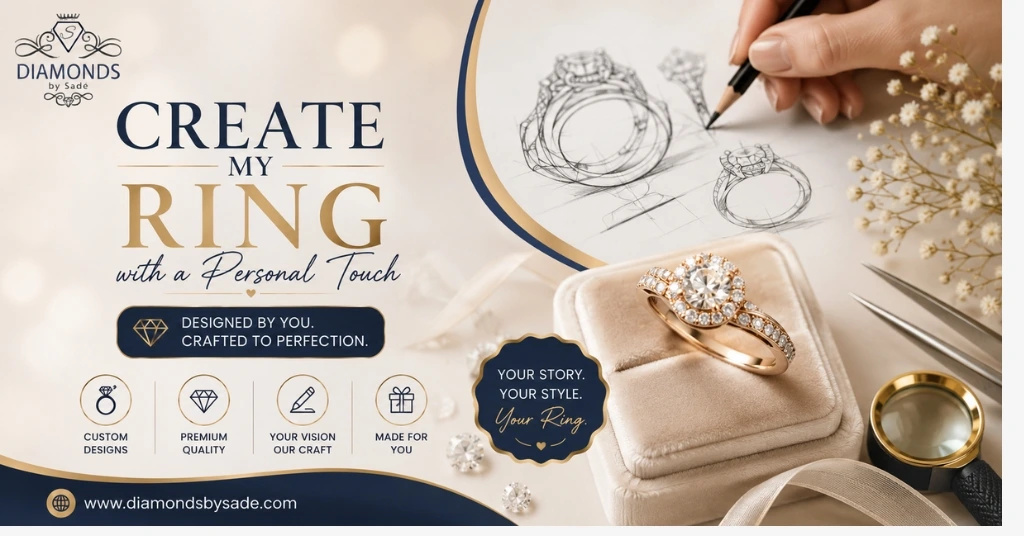
A ring is rarely just metal and stone. It’s a promise, a milestone, a memory wrapped around a finger. When someone types create my ring into a search bar, they aren’t just shopping — they’re looking for a way to turn a feeling into something they can wear every day. This guide covers what it actually takes to go from an idea to a finished, one-of-a-kind piece, and why personalization changes everything about the experience.
What It Really Means to Create My Ring
To create my ring is to take control of every decision a factory line usually makes for you: the metal, the stone, the setting, the engraving, even the story behind the piece. Instead of choosing from a rack of identical rings, you start with a blank canvas. A jeweler works alongside you — sketching, refining, adjusting — until the piece in front of you matches the one you originally pictured.
This matters because off-the-shelf jewelry is built for the average buyer, not for you specifically. Sizes are approximate, stone choices are limited, and any personal detail is usually an afterthought bolted onto a finished design. A personalized approach flips that order: customization is the starting point, not an add-on squeezed in at checkout.
Why Personal Touches Matter in Jewelry
Jewelry carries emotional weight in a way few other objects do. A ring can mark an engagement, a wedding, a graduation, a personal milestone, or simply a moment worth remembering on its own terms. The details are what make a piece personal: a birthstone from the month you met, initials hidden inside the band, a metal tone that matches your everyday style, or a setting inspired by a place that means something to you.
These small choices are what separate a mass-produced accessory from a piece that actually tells a story. Personalization doesn’t need to be extravagant — sometimes a single engraved date or an unconventional stone cut is enough to make a ring unmistakably yours.
How to Design My Ring: A Step-by-Step Approach
Learning how to approach the process starts with understanding four building blocks: metal, stone, setting, and band style.
Choose your metal
Gold, platinum, and silver each wear differently over time and suit different lifestyles. Platinum resists tarnish and holds up well to daily use; rose gold has a warmer tone that pairs naturally with vintage-inspired shapes.
Pick your center stone
Diamonds remain the most popular choice, but sapphires, emeralds, and moissanite are increasingly common among people who want color or a lower price point without sacrificing brilliance.
Select a setting
Prong settings expose more of the stone’s surface and let in more light. Bezel settings wrap around the stone for extra protection during active days. Halo settings surround the center stone with smaller accents for added sparkle.
Finalize the band
Plain, pavé, twisted, or two-tone — the band is usually where the most personality lives.
Working through these steps with a jeweler, either in person or through a digital rendering tool, is the fastest way to design my ring without guesswork.

Build My Ring: Craftsmanship That Actually Lasts
Once a design is locked in, it’s time to build my ring using techniques that have barely changed in centuries, even as the tools around them have modernized. Most custom pieces start as either a hand-carved wax model or a CAD file milled into a wax or resin pattern. That pattern is then cast in molten metal through lost-wax casting, a process jewelers have relied on for thousands of years.
After casting, a bench jeweler cleans up the piece, sets the stones by hand, and polishes the metal to its final finish. This is where craftsmanship really shows: hand-set stones sit more securely and catch light more evenly than machine-set ones, and a skilled polisher can bring out a depth in metal that a factory finish rarely achieves.
Custom Made Ring vs. Ready-Made Jewelry
It’s worth asking honestly why a custom made ring is worth the extra time, and often the extra cost, compared to buying something already sitting on a shelf.
Ready-made rings come in bulk, standard sizes, and a limited selection of stone and metal combinations. They offer convenience and often cost less, but they target a general market rather than your hand, budget, or personal story. A bespoke ring takes a different approach. The jeweler designs it around your specifications from the first sketch, including your size, preferred stone, budget, and any meaningful details you want to incorporate.
There’s a practical argument here too: a tailor-made piece can often be built to better protect a stone based on your actual lifestyle. Someone who works with their hands frequently might choose a lower-profile setting than someone who wants maximum sparkle reserved for special occasions. That level of consideration simply isn’t available when you’re picking from a fixed inventory.
Occasions People Choose to Personalize a Ring
While engagement rings are the most common reason people commission a custom piece, they’re far from the only one. Anniversary bands, push presents to celebrate a new baby, graduation rings, and self-purchased “just because” pieces have all become more common as bespoke jewelry becomes more accessible.
Some people want to personalize a ring around a family heirloom stone, repurposing it into a modern setting that preserves sentimental value while updating the look entirely. Others commission a piece to commemorate a personal milestone — a new job, a recovery, a move to a new city — with something that has no traditional rulebook attached to it at all.
Choosing Gemstones, Metals, and Engravings
Beyond the major structural choices, the finer details deserve just as much attention.
Gemstones
These should be chosen with durability in mind as well as appearance. Diamonds and sapphires rank high on the Mohs hardness scale and hold up well to daily wear, while softer stones like opal or pearl suit occasional-wear pieces better.
Metals
Metals should match both aesthetic preference and lifestyle. People with metal sensitivities often do better with platinum or high-karat gold, which contain fewer alloyed metals that can trigger a reaction.
Engravings
These remain one of the simplest ways to add a personal touch — a date, a set of coordinates, a short phrase, or initials hidden inside the band where only the wearer knows they’re there.
Working with a Jeweler: What to Expect
A good custom jewelry experience usually follows a predictable arc: you start with a consultation to discuss your budget and vision, move into the design phase with sketches or a 3D render, refine the proportions during a revision round, and then begin production. The production timeline typically takes two to eight weeks, depending on the design’s complexity and whether the jeweler needs to source specific stones.
Ask to see photos of previous work, request a written quote before production begins, and confirm what happens if you’re unhappy with the initial concept — reputable jewelers build revision rounds into the process because getting the details right matters more than getting them fast.
Caring for a Personalized Piece
Once your ring arrives, a little maintenance keeps it looking its best for decades. Clean it periodically with warm water, a mild soap, and a soft brush to remove everyday buildup around the setting. Have prongs checked once a year by a jeweler, since loose prongs are the most common cause of lost stones. Store rings separately from other jewelry to avoid scratches, and remove them before heavy manual work, swimming in chlorinated water, or applying lotions and perfumes directly to the metal.
Final Thoughts
Deciding to create my ring is ultimately a choice to prioritize meaning over convenience. Whether the process starts with a rough sketch, a family stone, or a single idea scribbled on a napkin, personalized jewelry rewards patience with something no shelf display can offer: a piece that is entirely, unmistakably yours.
FAQS
How long does it take to make a custom ring?
Most custom pieces take two to eight weeks from final design approval to delivery, depending on stone sourcing and design complexity.
Is a custom ring more expensive than a ready-made one?
Often slightly more, though not always — repurposing existing stones or metal can offset labor costs, and simpler custom designs can land at the same price as premium ready-made pieces.
Can I use my own stone or heirloom piece?
Yes. Many jewelers specialize in resetting inherited or existing stones into new, modern designs.
What if I don’t know exactly what I want?
A good jeweler will guide you through reference images, mood boards, and rough sketches until a direction emerges naturally — you don’t need a finished vision to get started.
Do I need to visit a jeweler in person? N
ot necessarily. Many studios now handle the entire process remotely, using video consultations and digital renderings to walk you through every decision before anything is cast. In-person visits are still valuable for trying on stone sizes or metal tones in natural light, but they’re no longer a requirement for a smooth, personalized experience.